Managing a household requires a steady balance of time, physical endurance, and planning. For many Melburnians living with a disability, everyday domestic chores like scrubbing showers, changing heavy bed linen, or preparing healthy meals can become major obstacles to health, safety, and everyday comfort.
If keeping up with routine house upkeep is becoming too much to handle alone, the National Disability Insurance Scheme (NDIS) offers targeted funding to keep your home clean, safe, and organized.
This expert guide breaks down exactly what NDIS household tasks Melbourne services cover, the actual hourly rates involved, who qualifies for help, and how a dedicated household task worker NDIS can maximize your independence at home.
In plain terms, household tasks support is hands-on assistance with essential day-to-day domestic chores that you cannot safely or independently complete due to your disability.
This funding sits within your NDIS Core Supports budget, under the sub-category Assistance with Daily Life. Because Core Supports funding is completely flexible, you have full choice and control to shift your funds around to secure more or less home help as your daily health needs fluctuate—all without needing a formal, slow plan review.
The primary goals of this funding are:
Also, this service is completely separate from personal care. Personal care is direct physical assistance with your body, like showering, grooming, or dressing, while domestic support is solely about looking after your physical home environment.
The NDIS funds practical, daily home help to ensure your living environment remains functional and safe. It focuses heavily on standard hygiene and core accessibility.
The top 6 household tasks covered under standard domestic support packages include:
1. General House Cleaning
A support worker can vacuum your carpets mop your floors and empty your rubbish bins. They might also tidy your kitchen benches and scrub your bathroom to help keep your place safe, clean and hygienic.
2. Laundry and Linen Help
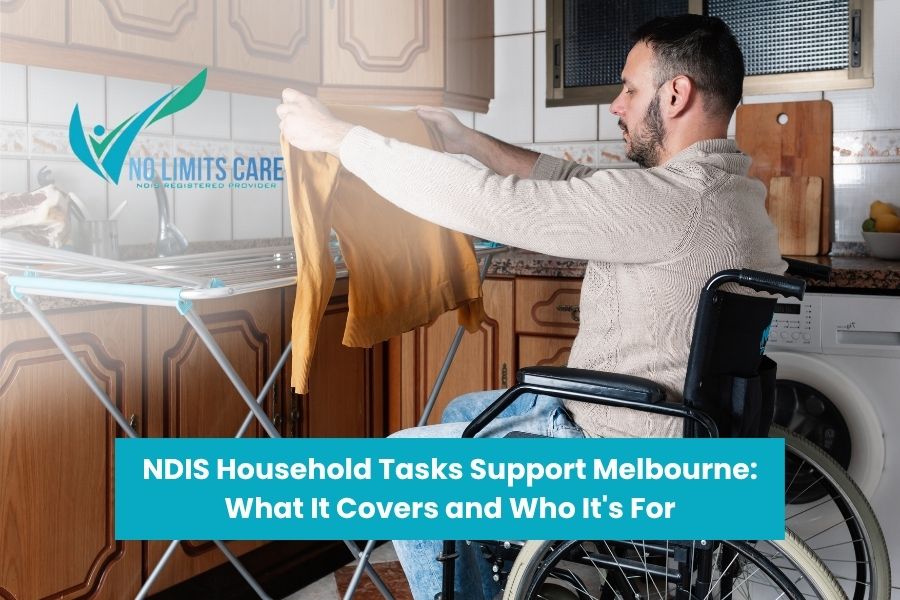
To prevent pain or injury from lifting and bending, a worker can handle your laundry. They will wash, dry, fold, and iron your clothes, as well as change your bed sheets.
3. Cooking and Meal Preparation
The NDIS can cover a worker who helps you get meals ready. They can chop ingredients, cook simple healthy meals keep food stored safely in the fridge, and handle the washing up so there arnt any dirty dishes left.
4. Grocery Shopping and Errands
If the supermarket is hard to get around, a worker can step in. They can help you write a shopping list, drive you to the store, carry heavier bags or assist you in ordering groceries online.
A worker can collect garbage from inside your house and take it to the outdoor bins. They will also move your heavy wheelie bins to the kerb on bin night and bring them back the next day.
The NDIS funds basic outdoor chores to keep you safe. A worker can mow your lawn to reduce fire or snake hazards, clear weeds from your paths to prevent falls, and test your smoke alarms.
You do not receive household task funding automatically just by being an NDIS participant. To secure this help in your plan, you must demonstrate to the National Disability Insurance Agency (NDIA) that your disability directly stops you from doing these chores on your own.
During your initial planning meeting or an annual plan review, the NDIA evaluates your request against their strict reasonable and necessary criteria. To win approval, the support must pass these specific benchmarks:
Common conditions that regularly qualify for domestic help include permanent physical disabilities affecting mobility, advanced neurological conditions, significant intellectual or cognitive impairments, chronic fatigue, and severe psychosocial conditions that impact executive functioning or daily motivation.
Securing household support requires strong, professional documentation. Simply telling your planner that you struggle around the house is rarely enough to get funded. To build a sort of unshakeable case for your review, you should gather:
To manage your budget effectively and protect yourself from overcharging, it helps to understand standard NDIS pricing structures.
2025–2026 Price Guide Limits: Under the current NDIS Pricing Arrangements, standard weekday hourly rates for a household task worker range from $57 to $59 per hour. These rates may scale higher if you live in designated remote or very remote geographic areas.
These standard rates cover the support worker’s base wage, insurance, superannuation, and provider overheads. When you sign a service agreement with a provider, check that their fees match the official price guide limits. Also watch for any extra charges, like provider travel charges; these should be written clearly upfront before any services start.
No Limits Care provides dedicated, professional domestic assistance tailored to the unique geographic needs of diverse Melbourne communities.
Whether you require consistent home help disability Williams Landing services close to our western suburbs operations or need reliable domestic support NDIS Clyde Melbourne teams working out of the rapidly expanding south-eastern growth corridors, our local staff are ready to help.
We match you with skilled household workers who respect your privacy, listen to exactly how you like your home managed, and work hard to maintain your property as a clean, comfortable sanctuary that fosters long-term independence.
To avoid frustrating budget rejections or issues with your plan manager, it is vital to know what the NDIS will completely refuse to pay for under the banner of household chores:
Our experienced team can review your plan, check your available funding balances via the MyPlace portal, and create a straightforward service agreement that fits your weekly routine perfectly. We pride ourselves on providing highly personalized care solutions that align directly with your independent living goals.
Does the NDIS cover house cleaning fees?
Yes, the NDIS will fully pay regular house cleaning fees if your disability prevents you from cleaning your own home safely. This funding comes from your Core Supports budget under Assistance with Daily Life. It covers tasks like vacuuming, mopping, and bathroom sanitation.
Can the NDIS pay for my weekly groceries?
No, the NDIS does not cover raw food costs or grocery bills because these are standard day-to-day living expenses that every Australian faces regardless of disability. However, it completely funds the support worker time needed to help you shop or prepare meals.
Does NDIS household tasks fund lawn mowing?
Yes, basic lawn mowing and straightforward pathway weeding can be covered if your yard setup creates an immediate safety worry or a tripping risk. It won’t include bigger landscaping jobs, fancy tree trimming, garden concept work, or structural upgrades outside.
Can I choose my own household support worker?
Yes, under the NDIS care framework, you maintain complete choice and control over who enters your home. You can select a registered provider like No Limits Care, work out preferred scheduling, and find a support worker who aligns nicely with your personal preferences.
What is the difference between SIL and domestic support?
What evidence do I need for my plan review?
How do I add household tasks to my NDIS plan?
You need to discuss your specific domestic challenges during your initial planning meeting or your scheduled plan review. Be prepared to present clear allied health evidence showing that managing your household chores independently places your safety or health at risk.