


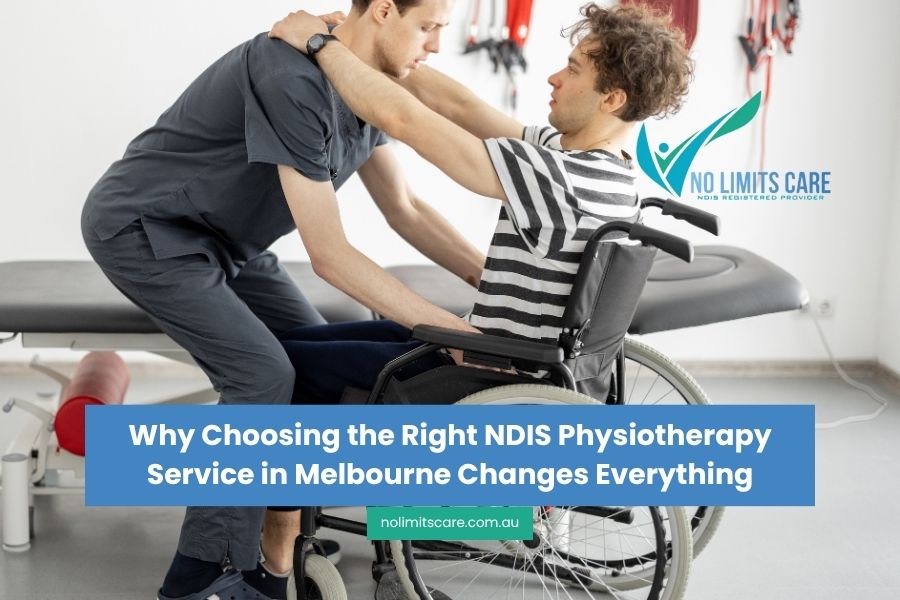
In the ever-evolving landscape of the National Disability Insurance Scheme, 2026 has emerged as a year of significant recalibration. For NDIS participants across Melbourne, from the quiet leafy streets of the outer east to the vibrant hubs of the northern suburbs, physiotherapy remains one of the most vital “Capacity Building” supports available.
However, the difference between a generic exercise program and a specialised NDIS physiotherapy service in Melbourne is profound. It’s the difference between merely “maintaining” a condition and actively expanding what is possible in your daily life. At No Limits Care (NLC), it is of the opinion that physiotherapy is not something to include in your plan because it is something to be included in it; it is a line item; but rather, physiotherapy is something that will make you independent.
This is a more in-depth guide to the changing expectations of the 2026 healthcare standard, the necessity of mobile support, and why the provider you choose in Melbourne is the biggest decision you will make this year.
1. The 2026 Shift: Understanding the New NDIS Planning Framework
We are currently in the year 2026 and the NDIA is directed towards a more organized strategy of Support Needs Assessment. It translates to the fact that the evidence presented by your therapists than ever before must be more specific.
Why Evidence is the New Currency
Gone are the days of vague progress notes. Today, a NDIS Registered Physiotherapist in Melbourne must provide data-driven evidence that connects your physical therapy directly to your “Reasonable and Necessary” goals.
- Outcome Measurements: We use standardised tools (like the GMFM or Berg Balance Scale) to prove to the NDIA that your funding is creating measurable changes.
- Goal Alignment: If your goal is “Community Participation,” our physiotherapy doesn’t just happen on a treatment table; it happens at your local Melbourne shopping center or park, practicing the mobility you need to engage with the world.
2. The Power of "In-Home" Context: Mobile Physiotherapy for NDIS Participants
To a significant number of Melburnians with a disability, the city is the greatest obstacle in their path to regular care. The physical and psychological burden of getting to a clinic may be heavier than the session itself, between the uncertainty of the traffic on the West Gate Bridge and the inability to find a parking place in the CBD.
Breaking the Clinical Barrier
Mobile Physiotherapy for NDIS Participants removes these obstacles. When NLC brings the “clinic” to your living room, we see the real-world challenges you face every day:
- The “First Meter” Challenge: Many falls occur in the first few steps out of bed. We treat you in that exact environment.
- Kitchen & Bathroom Safety: We check your balance and strength in areas that pose the greatest risk to you and give you real-time feedback on the assistive technology and posture concerns.
- Saving Energy: You can give 100 percent of your energy on rehabilitation exercises by saving the energy that you would have wasted travelling to a clinic in Dandenong or Preston.
3. The Cornerstone of Your Plan: NDIS Functional Capacity Assessment Melbourne
One of the most critical services we provide at No Limits Care is the NDIS Functional Capacity Assessment (FCA) Melbourne. As the NDIA moves toward more structured assessments in 2026, having a high-quality FCA can be the difference between a plan that meets your needs and one that falls short.
What Makes an NLC Assessment Different?
An FCA is a comprehensive 10-to-15-hour process (including clinical observation and report writing). Our physiotherapists look at:
- Mobility & Transfers: Are you mobile enough to go out of your wheelchair to your bed? What is your falls risk on Melbourne’s often uneven footpaths?
- Self-Care Capacity: What is the effect of physical strength on your dressing, showering, and preparing meals?
- Social Participation: Do you have physical obstacles that make you not able to meet your friends in a cafe or even a local footy match?
- Future Recommendations: We do not just see it these days. We forecast the Allied Health Services Melbourne you will need for the next two years to ensure you aren’t left without support.
4. Navigating the 2026 Price Guide: Physiotherapy Support Under NDIS Funding
Understanding your budget is essential. As of the latest 2025-26 Annual Pricing Review, the NDIS has maintained strict price limits for therapy support.
Breaking Down the Costs
Under the current Physiotherapy Support Under NDIS Funding guidelines, participants are typically funded at a rate of approximately $193.99 per hour (Standard) in Melbourne.
- Travel Claims: In 2026, travel rules are more transparent. Providers can claim up to 30 minutes of travel time in “MMM1” (Metropolitan Melbourne) areas. At NLC, we pride ourselves on efficient scheduling to ensure more of your budget goes toward direct therapy rather than transit.
- Report Writing: The NDIA recognizes that a therapist’s “non-face-to-face” time is vital for your plan reviews. We are transparent about these costs, ensuring you always know exactly how your “Improved Daily Living” budget is being utilised.
5. Specialized Care: NDIS Allied Health Services Melbourne
Disability is a wide industry, and a one size fits all strategy is not effective. Southern and Central NDIS Allied Health Services in Melbourne should be as multicultural as the city.
Neurological Rehabilitation
In the case of participants who have a condition such as Cerebral Palsy, Spina Bifida or Spinal Cord Injuries, physiotherapy is a lifelong requirement. Our therapists are specialists in neurological patterns with a special interest in:
- Spasticity Management: Easing pain and enhancing the functionality of the limbs.
- Gait Training: Applying new evidence-based methods to enhance walking efficiency.
- Post-Surgical Rehab: Helping participants in the essential months of life after a big surgery.
Supporting the “Missing Middle”: Young Adults in Transition
A young adult (18-25) transiting the paediatric into the NDIS community is one of the most underserved in Melbourne. It is a risky time when investment usually declines. Our In-Home Physiotherapy for Disabled Adults Melbourne team focuses on “Transition Goals”, building the physical strength required for employment, tertiary study, or moving into Supported Independent Living (SIL).
6. Case Study: The "No Limits" Impact in Local Melbourne
To appreciate the worth of a NDIS physiotherapy service in Melbourne, one may refer to the experience of one of NLC recipients in South East suburbs, namely, Mark.
Mark lived with a significant physical disability and spent years visiting a local clinic. While his strength was stable, he remained unable to navigate the three steps leading to his front porch, leaving him “house-bound” unless a family member was present.
By switching to Mobile Physiotherapy for NDIS Participants, NLC was able to:
- Assess the environment: We realised the clinic exercises didn’t mimic the specific height and “tread” of his home steps.
- Functional Training: We spent six weeks practicing those exact steps in his own environment.
- The Result: Mark now accesses his community independently. His NDIS plan was subsequently updated to reflect his increased “Social and Economic Participation”, all because the therapy moved from a clinic to his home.
7. Choosing Your Provider: Why NLC is the "Trusted" Choice
When you search for a NDIS Registered Physiotherapist in Melbourne, you are looking for more than a degree; you are looking for a commitment. At No Limits Care, we distinguish ourselves through:
- Zero Waitlists: We believe that when you are ready to work on your goals, your therapist should be too.
- Multidisciplinary Coordination: Our physios work together with your Occupational Therapists and Support Coordinators to ensure a “wrap-around” care model.
- Cultural Competence: Melbourne is a pot melting pot. All the Melburnians, including the CALD (Culturally and Linguistically Diverse) populations, are trained to receive culturally safe and inclusive care by our team.
8. Frequently Asked Questions
How much of my NDIS budget should I allocate for physiotherapy?
This depends on your goals. For most participants, a “Standard” allocation might be 1 hour per week or fortnight. However, if you have a goal like “learning to walk with a frame,” you may require “Intensive Blocks” of 2–3 sessions per week for a set period. We help you calculate this during your initial assessment.
Can I use my “Core” budget for physiotherapy?
Generally, physiotherapy is funded under the Capacity Building (Improved Daily Living). However, if your plan is “Flexible,” or if you have unspent Core funds and a documented change in circumstances (like a recent fall), you may be able to use Core funds while waiting for a plan to review. You should always call your Plan Manager or NLC consultant.
What is the difference between a Physio and an Exercise Physiologist (EP)?
Although both play important roles to NDIS Allied Health Services in Melbourne, a Physiotherapist will normally be involved in the diagnosis of physical conditions, manual therapy and complex functional mobility. An EP focuses more on “Exercise as Medicine” for chronic disease management. The most successful results are often achieved by a “Combined Approach” at NLC.
How does NLC handle “Remote” or “Outer-Suburban” travel?
Melbourne is sprawling! We have therapists in Pakenham and Melton or in the Mornington Peninsula; we have our therapists assigned zones. This is to reduce the amount of money you spend on travelling and you enjoy more face-to-face time.
9. Checklist: Preparing for Your First Mobile Physiotherapy Visit
To get the most out of your In-Home Physiotherapy for Disabled Adults Melbourne session, we recommend:
- Clear a Small Space: You don’t need a gym, just enough room for a yoga mat or for your therapist to move around your mobility aid.
- Prepare Your Plan: Your therapist must view your page with the goals to be in compliance with the treatment.
- Wear Comfortable Clothing: Something that you can move around in.
- Document Your “Bad Days”: Physiotherapy is about solving problems. Share with us the hardest things during the worst days and we will create a strategy to help in the hardest times.
10. The Future of Disability Support in Victoria
As Melbourne grows, so does the need for high-quality, compassionate care. The NDIS is a journey, not a destination. By choosing a NDIS physiotherapy service in Melbourne that stays ahead of legislative changes and prioritises the human element of care, you aren’t just managing a disability, you are building a life with “No Limits.”
Whether you are looking for a one-off NDIS Functional Capacity Assessment Melbourne or a long-term NDIS Registered Physiotherapist Melbourne, No Limits Care is here to walk (or roll) beside you every step of the way.
Conclusion
Your independence shouldn’t be a “future goal”, it should be your daily reality. With the right Physiotherapy Support Under NDIS Funding, you can transform your physical capacity and reclaim your confidence in the community.
At No Limits Care (NLC), we are proud to be Melbourne’s trusted partner in disability support. We bring the expertise, equipment, and passion directly to your door.
Stop settling for “standard” care and start your “No Limits” journey.
Click Here to Book Your Initial In-Home Consultation with No Limits Care
Call Our Melbourne Team on (Insert Number) to Discuss Your NDIS Plan